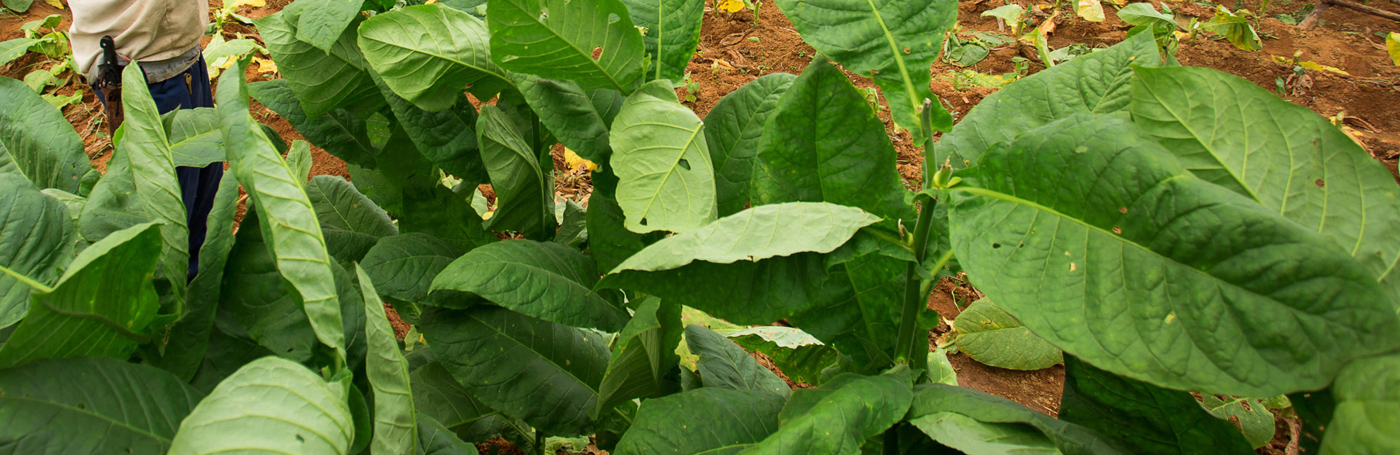
Tobacco
India is the second largest producer of tobacco in the World. Tobacco provides livelihood to more than 45 million Indians, including farmers, farm workers, women workers, tribals etc. with 70% of these livelihoods in the agricultural sector.
Tobacco is a hardy and drought resistant crop. Tobacco can even be grown in infertile soil, leaving precious fertile land areas of the country for the cultivation of staple and food crops. Tobacco is grown in 4.64 Lakh hectares of the arable land of this country and ensures prosperous living for the farming community compared with existing rural standards of subsistence living.
Among cigarette tobacco varieties, the Flue-Cured Virginia (FCV) tobacco is the most dominant variety in India as well as the world. FCV tobacco is grown in the states of Andhra Pradesh, Telangana and Karnataka, and thrives in soil and climatic conditions that are unsuitable for cultivation of other crops.
Besides sustaining a small domestic market, the FCV tobacco produced in India is also exported to over 100 countries of the world generating significant foreign exchange earnings for the country.
However, FCV tobacco farmers in India face a serious threat to their livelihood as excessive taxation on cigarettes and extreme regulations impact the demand for domestic tobaccos. Such policy measures have benefited the illegal operators and smugglers of cigarettes. As per Euromonitor International, Illicit cigarette volumes in India registered a huge growth in the past decade, increasing their share in the total cigarette market from around 19% in 2014 to 26% in 2024.
Illegal cigarettes do not use locally grown tobacco and hence, an increase in illegal trade impacts the livelihood of tobacco farmers in the country as demand for domestic tobaccos reduces further. The increase in illicit cigarette volumes has resulted in shrinkage of FCV tobacco crop size by approximately 40% between 2013 and 2021. The drop in FCV tobacco crop production during this period led to the loss of millions of man-days of employment in tobacco growing regions in the country.
The situation has been further aggravated by the Government’s recent decision to impose significantly high excise duties on cigarettes in place of the GST Compensation Cess, effective from 1st February 2026. These high excise duties along with 40% GST applicable on Retail Sale Price have resulted in unprecedented (70%) increase in taxes on cigarettes. This tax increase will provide a further boost to sales of smuggled and illegal cigarettes which are sold cheaper due to tax evasion.
High tax increases in the past have caused significant drop in tobacco production, leading to reduced earnings and livelihood losses in tobacco-growing areas in the country.
FCV Tobacco farmers are mostly small & marginal farmers cultivating tobacco in poor soils under rainfed conditions with limited resources. There is no economically viable alternate crop suiting soil & weather conditions of the regions where tobacco is grown. Therefore, drop in demand for FCV tobacco will have a devastating impact on the tobacco farming community.
Proposed COTPA Amendment Bill, 2020 will Impair Livelihood of Farmers
The proposed draft “Cigarettes and Other Tobacco Products (Prohibition of Advertisement and Regulation of Trade and Commerce, Production, Supply and Distribution) (Amendment) Bill, 2020” will provide huge boost to the ever-growing illicit cigarette trade in India and will adversely impact the legal cigarette trade. As a result, there will be a drastic drop of demand for tobacco grown by Indian tobacco farmers and they will lose their only source of livelihood. In view of the absence of any alternative source of livelihood, the Government should not bring any amendment which will precipitate the crisis of farmers livelihood.
WHO FCTC is A Threat to Livelihood of Millions of Tobacco Farmers
Various Articles of the Framework Convention on Tobacco Control (FCTC) under the World Health Organization (WHO) will have serious impact on the livelihood of tobacco farmers in India:
- Exclusion of key stakeholders like farmers from participating in the development of regulations on tobacco under Article 5.3 is a denial of their constitutional and democratic right to be consulted and heard in the process of the making of laws that will have a direct bearing on their livelihood.
- Any restriction on the usage of ingredients/additives under FCTC Articles 9 & 10 would make at least 30% of tobacco produced in the country unusable necessitating import of expensive tobaccos by local manufacturers. This can only be at the expense of Indian farmers and at the cost of valuable foreign exchange for the country.
- Articles 17 & 18 of the FCTC seeks shifting tobacco farmers to alternate crops. In absence of a viable alternative crop, such policy initiatives would pose a huge threat to the livelihood of tobacco farmers in the country. It is imperative that no alternative should be considered without proper trials and experimentation that can establish the feasibility of sustainable and economically viable alternative crops.